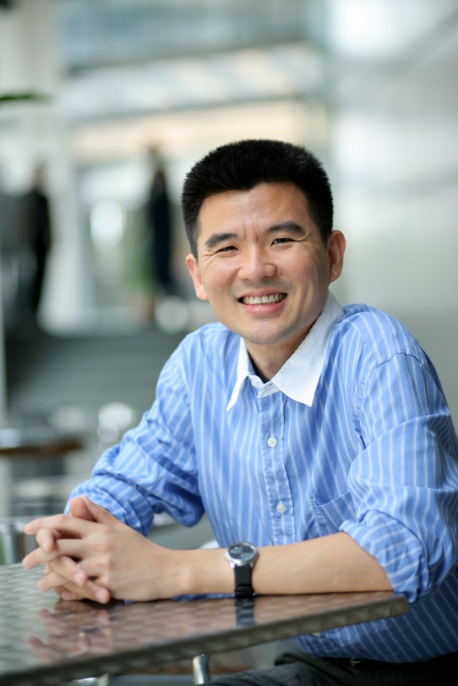
主讲人:Tony Q.S. Quek, IEEE Fellow, WWRF Fellow
报告时间:2026年6月1日15:30-16:30
报告地点:信息楼133会议室
报告人简介:
Tony Q.S. Quek received the B.E. and M.E. degrees in Electrical and Electronics Engineering from Tokyo Institute of Technology, respectively. At Massachusetts Institute of Technology, he earned the Ph.D. in Electrical Engineering and Computer Science.Currently, he is the Associate Provost (AI & Digital Innovation) and Cheng Tsang Man Chair Professor with Singapore University of Technology and Design (SUTD). He also serves as the Director of the Future Communications R&D Programme, and the ST Engineering Distinguished Professor. He is a co-founder of Silence Laboratories and DN-RAN. His current research topics include wireless communications and networking, network intelligence, non-terrestrial networks, open radio access network, AI-RAN, and 6G.
Dr. Quek was honored with the 2008 Philip Yeo Prize for Outstanding Achievement in Research, the 2012 IEEE William R. Bennett Prize, the 2016 IEEE Signal Processing Society Young Author Best Paper Award, the 2017 CTTC Early Achievement Award, the 2017 IEEE ComSoc AP Outstanding Paper Award, the 2020 IEEE Communications Society Young Author Best Paper Award, the 2020 IEEE Stephen O. Rice Prize, the 2022 IEEE Signal Processing Society Best Paper Award, the 2024 IIT Bombay International Award For Excellence in Research in Engineering and Technology, the IEEE Communications Society WTC Recognition Award 2024, and the Public Administration Medal (Bronze). He is an IEEE Fellow, a WWRF Fellow, an AIIA Fellow, a member of NAAI, and a Fellow of the Academy of Engineering Singapore.
报告内容介绍:
The RAN intelligent controller (RIC) is cloud native and a central component of a virtualized RAN network. The RIC enables to deployment of machine learning and AI techniques to optimize resources and services in the RAN. Thus, it is an important component that brings intelligence, agility, and programmability to the radio access network. On the other hand, there is a future trend to explore the concurrent use of converged computer-and-communications infrastructure to run RAN and AI and Generative AI workloads, enhancing platform utilization and creating new monetization opportunities. Lastly, it is crucial to understand the radio interface requirements for running AI and Generative AI applications across consumer, enterprise, and government sectors. In this talk, we will share about AI-RAN Alliance and how it plans to transform future networks with AI. Furthermore, we will also share some of our work in AI-RAN throughSingapore’s Future Communications Research and Development Programme (FCP).